Print Bundle: PE Chemical
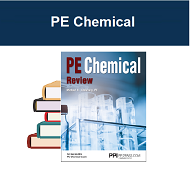
Make sure you have everything you need for PE Chemical exam day success. This comprehensive collection of resources provides everything you need to prepare to pass the PE Chemical exam the first time. The review materials in this bundle are updated to the current exam specs, contain thorough coverage of mechanical engineering principles and codes, and include numerous practice problems to challenge your knowledge of those concepts. This curated bundle includes Michael R. Lindeburg, PE's PE Chemical Review, practice problems, and realistic practice exams.
Products Included:
- PE Chemical Review
- PPI PE Chemical Review Index
- PE Chemical Practice
- PE Chemical Practice Updates and Corrections (June 2020)
- PE Chemical Practice Exam
- Casio FX-115 ES Plus Second Edition Advanced Scientific Calculator
Topics Covered:
- Mass/Energy Balances
- Thermodynamics
- Heat Transfer
- Chemical Reaction Engineering
- Fluids Mass Transfer
- Plant Design and Operation
FAQs
Some states require a BS degree from an ABET-accredited engineering program to sit for the PE exam. Other states allow you to take the PE exam with a degree in engineering technology, physics, math, or chemistry—or without any degree—as long as you’ve met the required work experience. Check your state requirements to see if you can take the PE exam without an engineering degree.
Most states allow you to take the PE exam after passing your FE exam and gaining at least four years of post-college work experience. However, some states now allow examinees to sit for the PE exam before completing their work experience. Check your state requirements to see when you’re qualified to sit for the exam.
By NCEES pass rates (January 2026), the highest first-time pass rates were PE Agricultural & Biological (81%), Mining & Mineral Processing (80%), Fire Protection (78%), and Mechanical: Thermal & Fluid Systems (77%). But the truly 'easiest' PE exam is the one whose content matches your daily work: alignment with your experience beats raw pass-rate statistics. Choose the discipline that supports your career goals.